

Nanobubbles can form naturally or be produced through the use of various technological methods. There are many ways this is achieve. In Nature, scientists have discovered nano gas-filled bubbles in plant sap (stems and flowers), pigment cells (like those found in hummingbird feathers), and various aquatic environments like rivers, waterfalls, or wave crests, among others. The importance of these finding is the fact that the nanobubbles are naturally coated with surfactants. The most fascinating characteristic of nanobubbles is their remarkable resilience, as they can persist without breaking down, for days even weeks. They are even resistant when exposed some turbulence.
How can you tell nanobubbles are being formed?

What are the advantages of using Nanobubbles for the Aeration?
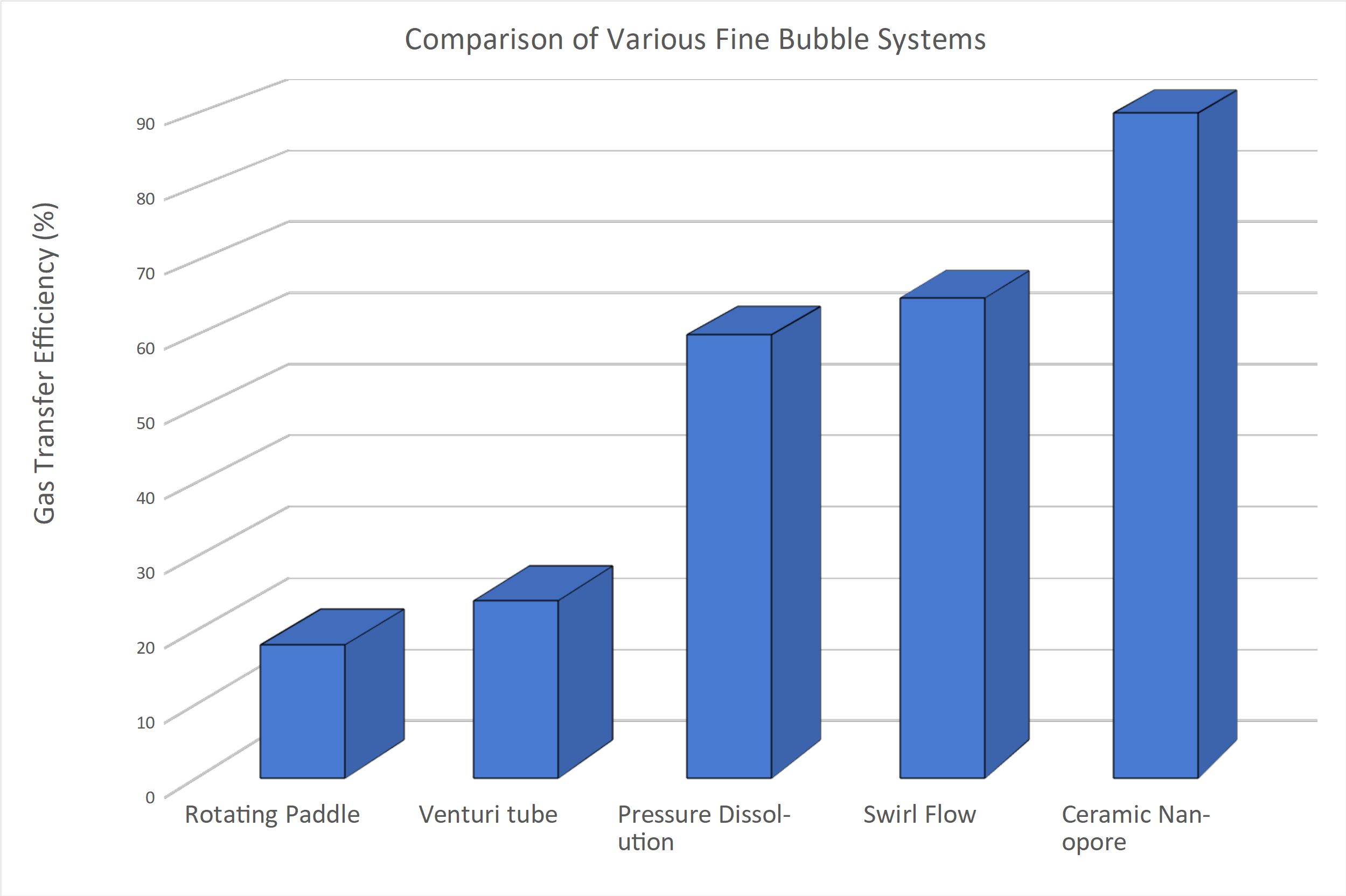
The advantage to using nanobubble aeration is efficiency. The amount of gas passed from source (compressed gas) into a fluid and remains dissolves or is trapped as nanobubbles in the fluid is as much as 95%. That means the gas transfer into a fluid substantially enhanced, up to 2-4 fold when you compare this to conventional diffusers or venturies.
Another remarkable feature about nanobubbles is their-particle like behaviour. Nanobubbles have a nanoparticle-like surface charge. This surface charge enables them to attract oppositely charged fine particles, compounds, minerals, fats, and proteins onto their surfaces. . In applications such as agriculture or medicine, minerals, nutrients, and active molecules can be effectively “loaded” onto the surface of nanobubbles, facilitating efficient transportation to cells, roots, and bacteria.
Nanobubbles act like “little magnets” because of their surface charge
Advanced oxidation & Nanobubbles: Why is this so important?
Nanobubbles play a significant role in promoting growth, health, and adaptive responses in plants, animals, and microorganisms due to their capacity to generate free radicals in biologically significant quantities. These free radicals are essential for cellular communication, enabling cells to perceive various physiological states such as stress, disease, embryonic growth, and metabolic processes. What makes nanobubbles particularly effective in targeting cellular processes is our ability to control the production of free radicals by adjusting the gas content and concentration. This feature highlights the potential of nanobubbles as a powerful tool for manipulating cellular functions.
Basil Comparison
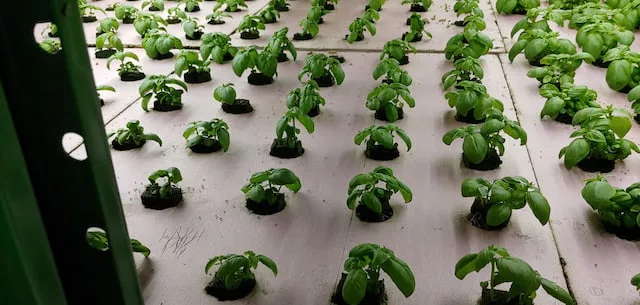
DO treated irrigation water without nanobubbles
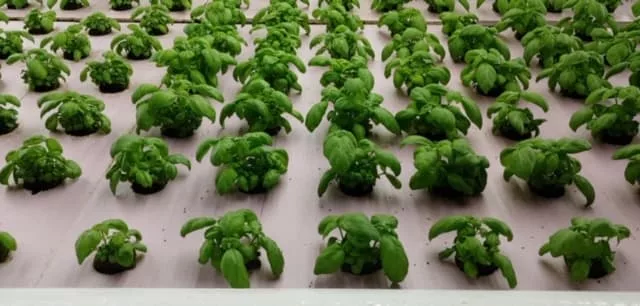
DO treated irrigation water with nanobubbles
Cleaning air, work place and all sorts of surfaces
Nanobubbles offer a versatile solution for disinfecting surfaces and certain water bodies. Similar to ozone or hydrogen peroxide, they generate potent free radicals, making them effective oxidants. Their ability to target specific areas for disinfection, coupled with on-site nanobubble production, presents an appealing approach for shock treatment of contaminated areas or on-site waste management and so much more. This approach work in synergy with microorganisms, meaning our technology helps to promote soil, land and water remdiation. What sets our approach apart from others is we are using a technology that require very low energy (in fact at times no electricity at all), while also with the gradual and passive release of free radicals using Anzai Technology serves a dual purpose: disinfecting pathogenic or toxic substances by attracting them to the bubble surfaces and bio-stimulating the microorganisms involved in the cleanup process during shock treatments.
You might be curious about the wide range of applications for this technology, and indeed, the list is extensive. Some of the popular applications include aeration, flotation, leaching, cleaning, chemical breakdown, and drug and nutrient delivery. Consequently, this technology finds utility across various sectors such as aquaculture, agriculture, medicine, wastewater treatment, and land and water remediation. We offer a dedicated section where you can explore each sector, showcasing our existing commercial services utilising this technology, as well as ongoing developments in various use cases.
Our technology
Currently, there are several established techniques for producing nanobubbles. The nanobubble technology developed by Anzai Kantetsu Co., LTD. utilises gas diffusion through a finely porous ceramic carbon material. Here, the small gas fragments emerging from the diffuser at the fluid interface are captured by the shear force generated by the fluid flowing over the diffuser’s surface. This shear force can be generated using either an in-line system or a moving propeller system.
Oxigensis has recognised the Anzai-Ceramic nanobubble generator from Anzai Kantetsu Co., LTD. as an ideal solution for Africa, as our primary objectives align closely with theirs. The technology, characterised by its static design and construction from carbon ceramic material, is particularly suitable for our focus on low-cost implementation and operation. Notably, the system boasts no moving parts, and its hardware requirements are minimal, often necessitating only a gas bottle and flowing fluid, with no need for water pressure.
Another crucial aspect of the Anzai Ceramic technology is its scalability, capable of treating water flow ranging from a few litres to cubic meters per hour. With an established track record spanning over a decade, Anzai Ceramic nanobubble technology has received numerous awards. The results attained through this technology can lead to substantial savings, including up to 400% in energy savings (equivalent to 1/20 of operational costs) and a reduction in monthly consumable expenses by as much as 30% (reduced usage of gas, chemicals, or fertilisers depending on the application).
If you find this technology intriguing or believe it could address a particular issue you’re facing, please don’t hesitate to reach out to us via email or phone. We’re eager to address any questions you may have and explore how we can assist you in getting started. Your inquiries are welcome, and we look forward to discussing potential solutions with you.